Egil Krogh
All the President's MenEgil Krogh was a White House aide who became a central figure in the Plumbers’ leak-investigation operation, a secretive project whose work connected senior administration officials to Howard Hunt and Gordon Liddy. The contrast between Krogh’s reputation as a scrupulous public servant and the unit’s intelligence-gathering methods made him a revealing point of entry into the administration’s effort to investigate leaks—and into the limits of what reporters could prove about who knew what.
Identity and Rise
Krogh had been a member of John Ehrlichman’s law firm in Seattle before serving on the White House Domestic Council staff. He also coordinated the Nixon administration’s worldwide campaign against drug trafficking. In February 1973, at age thirty-three, he became the youngest undersecretary in the Nixon Cabinet, taking the post at the Department of Transportation.
Before reporters began examining his connection to the Plumbers, Krogh had made a mild impression on Bernstein. Bernstein had met him at a ribbon-snipping ceremony, when Krogh was the President’s adviser on national-capital affairs. Krogh jogged around the Ellipse before work, and Bernstein asked why the administration could not find room in the District budget for paths where people could cycle and jog. Krogh answered in bureaucratic terms about “priorities.” He seemed pleasant and bland—an impression that would sit uneasily beside what the reporters later learned about his work with Hunt and Liddy.
The Plumbers and Their Reporting Line
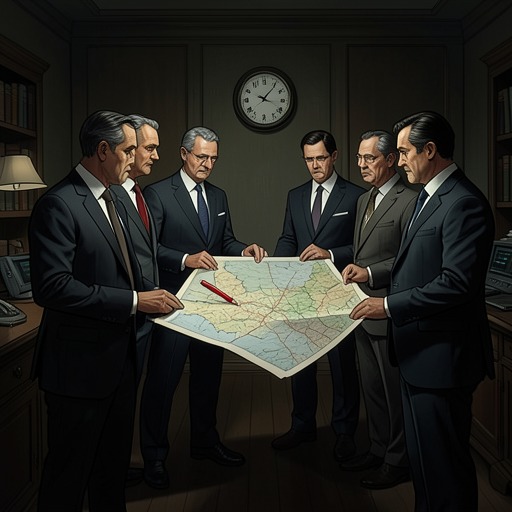
Krogh was part of the White House Plumbers project alongside Hunt, Liddy, and David Young. Young, formerly an appointments secretary to Henry Kissinger and a deputy on the project, had been lent to Ehrlichman’s staff; Krogh was one of Ehrlichman’s principal deputies. The Plumbers investigated leaks to the news media and reported to Ehrlichman. Their office was in the basement of the Executive Office Building, across from the White House.
The project had begun with an examination of how closely The New York Times’s account of the Pentagon Papers matched the classified documents, then expanded into efforts to find out how the papers had been leaked. The Plumbers also examined State Department leaks, including embassy cables and the routes through which they had passed. Hunt’s work, as the unit’s secretary recalled it, included reviewing State Department cables concerning the Pentagon Papers. This account establishes the project’s institutional setting and Krogh’s place in its hierarchy; it does not, by itself, specify which investigations Krogh personally directed.
Wiretap Information and the Limits of the Evidence
As the reporters pursued the Plumbers’ history, a friend of Krogh’s supplied a significant but incomplete lead: Krogh had reportedly said that Hunt and Liddy were being given information from national-security wiretaps. The friend remembered the remark as having been made shortly after Hunt and Liddy were indicted, but could recall no details. The report suggested that the Plumbers’ work had extended beyond searching for leaks in documents and cables to receiving information from intercepted conversations.
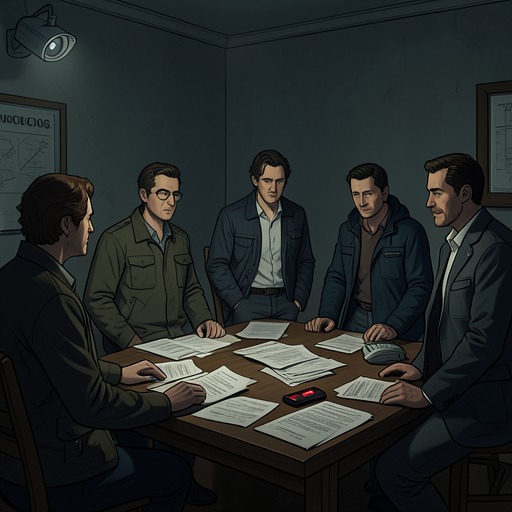
Separate sources described David Young’s role more specifically: he regularly routed transcripts of wiretapped conversations to Hunt and Liddy in 1971 and 1972. That evidence places the transmission within the project’s chain of work, but it does not show that Krogh personally collected, selected, or forwarded the transcripts. When the reporters returned to Kathleen Chenow, the Plumbers’ former secretary, to ask about the tapped data Young had sent, she declined to discuss it. The distinction between Krogh’s reported remark, Young’s described handling of transcripts, and the unanswered questions about individual responsibility remained essential to the story.
Reputation and Narrative Role
Reporters approached Krogh as a puzzle: the man they had taken for the White House “Mr. Clean” had worked alongside Hunt and Liddy in an operation investigating leaks. Friends jokingly called him “Evil Krogh,” a nickname that sharpened rather than resolved the contradiction between his reputation for rectitude and his association with the Plumbers. His rise to a Cabinet undersecretary in February 1973 made that contrast especially pointed, but the evidence presented does not turn association into proof of personal involvement in every action attributed to the unit.
Krogh’s significance in the account lies partly in this tension between formal position and evidentiary reach. The Plumbers reported to Ehrlichman; Young was identified as the aide who routed wiretap transcripts; and a friend recalled Krogh’s statement about Hunt and Liddy receiving wiretap information without supplying its particulars. Together, these details illuminate a working structure while preserving the question that the reporters were trying to answer: how far responsibility traveled upward through the chain of command.